
Apricots fell through my dream,
fleshy staccato night music on the tin roof.
Then strings: murmuration
of flies in Lenin Street dust and fulvous pulp.
Fulvous—orange
sounding like anger, or light,
fulgent as animal hides
which glistered salt from crawling out of the sea
when the first man fell to Earth, young
blue star to star.
Not a man, actually. Spangled in genitals,
heart clicking placidly
in a perfect body, like a fridge.
Apricots fell through my dream of a body
that full, rounded like the letter З
in a hard hello,
Zdravstvuyte, noises I made
at the old couple in felt boots in any weather.
They minded the town, two hinges
it swiveled on, and botanized it by its fathers,
“There goes Markovnya,” “There’s
Ivanovitch,” companionably, while each regime,
the names for everything changed.
In concrete apartments, rubble now,
glitter on the wallpaper.
Gold flaked off contradictory heroes.
Gold stars barbed cupolas
ringing the hour of their blind mendicant’s office.
“Shoo!” a girl hissed at him,
Say Me Yes in rhinestones on her T-shirt.
“What? He’s not really blind!”
Dogs of Bitches’ Square
whined through honeycomb and knockoffs,
brilliants of hardware on tarp,
ikons, questions always
falling to a period at the end.
In Ukraine, I was a soft-boiled twenty-two.
Taught English to children
who went on saying, “I feel normal,” gravely.
I shrank from angels in church,
tinctures of essential fury
steeped in feathers red
as vultures who bathe in wet ocher.
Diluted from me, years later, like canvas
under amber varnish
from Victorian art restorers trying to be
helpful. “Design must maintain its preponderance
over color,” a critic said then. “Otherwise painting
speeds to its ruin:
it will fall through color
just as mankind fell through Eve.”
A naked man thrust
at the Black Sea, anoxic.
“Look,” he yelled, “I fuck the waves!”
Smashing clams, tonguing: “Tastes like pussy.”
I did not feel normal,
my taste brooding in a saggy one-piece
while in dune grass, temporary couples fell
through color to their knees,
cut them on shells’ mercurial nacre.
Ruin wasn’t an apple but a stone
in an apricot,
the androgyne shining in its juices.
They looked until they knew what longing is.
It cracked them in two. Sexed, on clock time.
“Where is my wife?” the old man used to ask
the middle of Lenin Street,
watching for her red babushka. Red,
a word I forgot with their names,
just that it sounds like “beauty,”
how she’d pick over windfall on her way back,
blue mold furring it, like worlds.
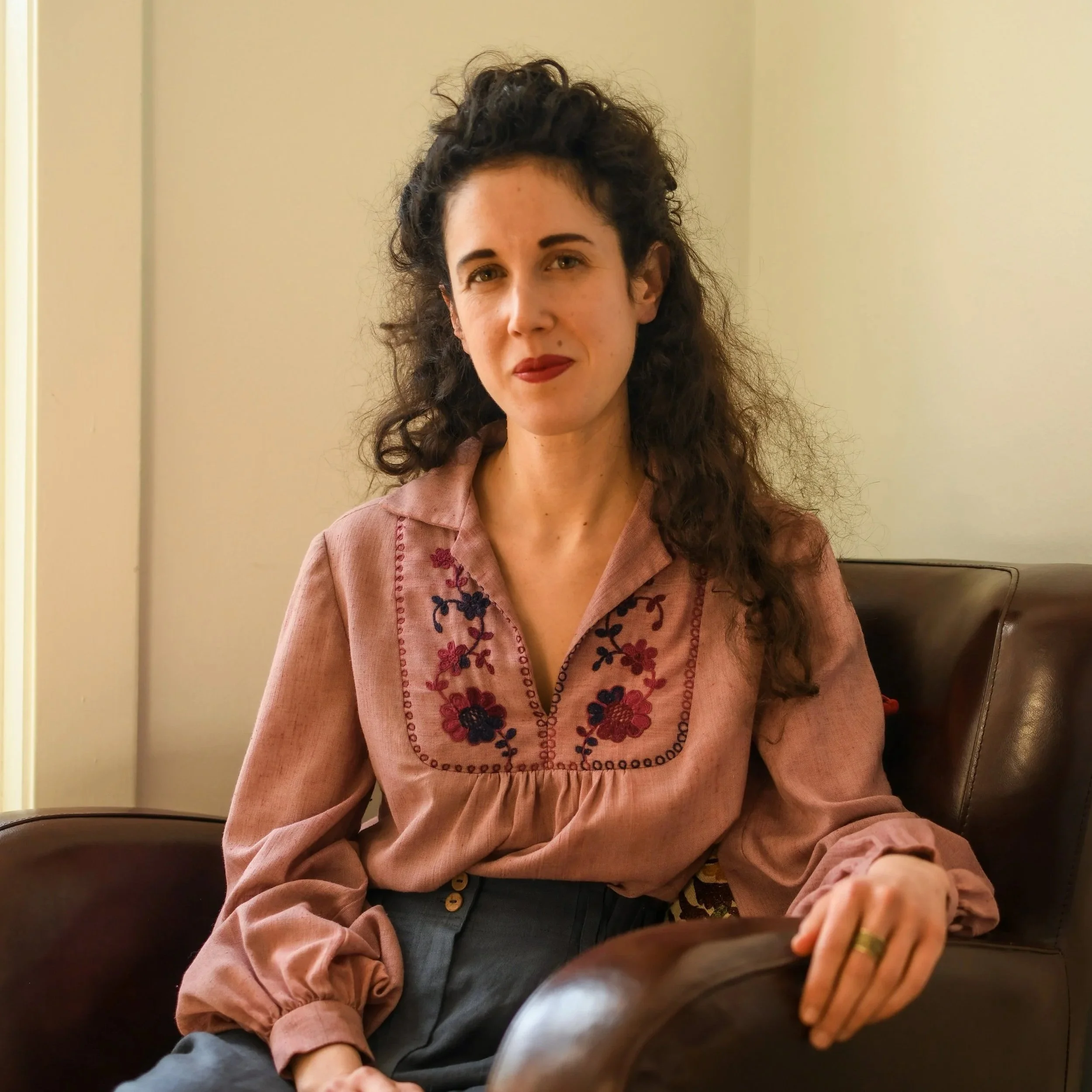
Ashley Keyser
A note from the poet: “For some Renaissance magicians, God was both male/female and the first human was too. This human fell to earth, and they and Nature intertwined, becoming lovers. My poem in Bat City comes from a book-in-progress inspired by erotic love, but these days, my sense of the erotic is pretty diffuse. It catches on saturated colors, on resonant and mysterious images, and -- more painfully -- on places I can't return to.”
Ashley Keyser lives in Chicago. Her work has appeared or is forthcoming in Gulf Coast, AGNI, The Adroit Journal, Quarterly West, and elsewhere. She is currently writing a poetry collection about colors and queer desire.
Website: ashleykeyser.com
Instagram: @ashley.keyser.poet